Ani Lacy’s art historical research focuses on Black Atlantic material culture, with particular attention to ceramics and practice-based methodologies. She is currently completing a PhD in the History of Art that examines early modern Black Atlantic ceramics as both material evidence and artistic production, situating these works within histories of forced migration, adaptation, and cultural continuity.
Her research engages the emergence of Black Atlantic art history as a field concerned with diasporic making, embodied knowledge, and the survival of Indigenous and African aesthetic systems under conditions of enslavement. Central to this work is the study of colonoware ceramics, low-fired earthenware vessels produced by enslaved African and Indigenous makers across the Atlantic world from the seventeenth through nineteenth centuries. Often treated primarily as archaeological artifacts, these vessels are approached in her research as works of art shaped by inherited techniques, local materials, and adaptive visual languages.
Lacy’s scholarship is informed by sustained engagement with clay as a material practice, allowing making to function as a mode of historical inquiry alongside archival and visual analysis. Across her work, she is interested in how material practices carry memory, transmit knowledge, and offer insight into Black domestic life, labor, and resilience within the Atlantic world.
This video documents wild clay collected in Vélez-Rubio, Spain, in 2025 as part of a residency with Joya AiR. These clays were gathered as part of an ongoing practice-based research process. The materials shown include raw clay deposits at different stages of processing, from collected earth and crushed aggregates to refined clay prepared for forming. Filmed in the studio, the sequence emphasizes variation in color, texture, and particulate composition, foregrounding clay as a site-specific material shaped by geology, handling, and time. The work situates material gathering as a form of research, connecting landscape, labor, and ceramic practice within a broader investigation of historical and diasporic clay traditions.
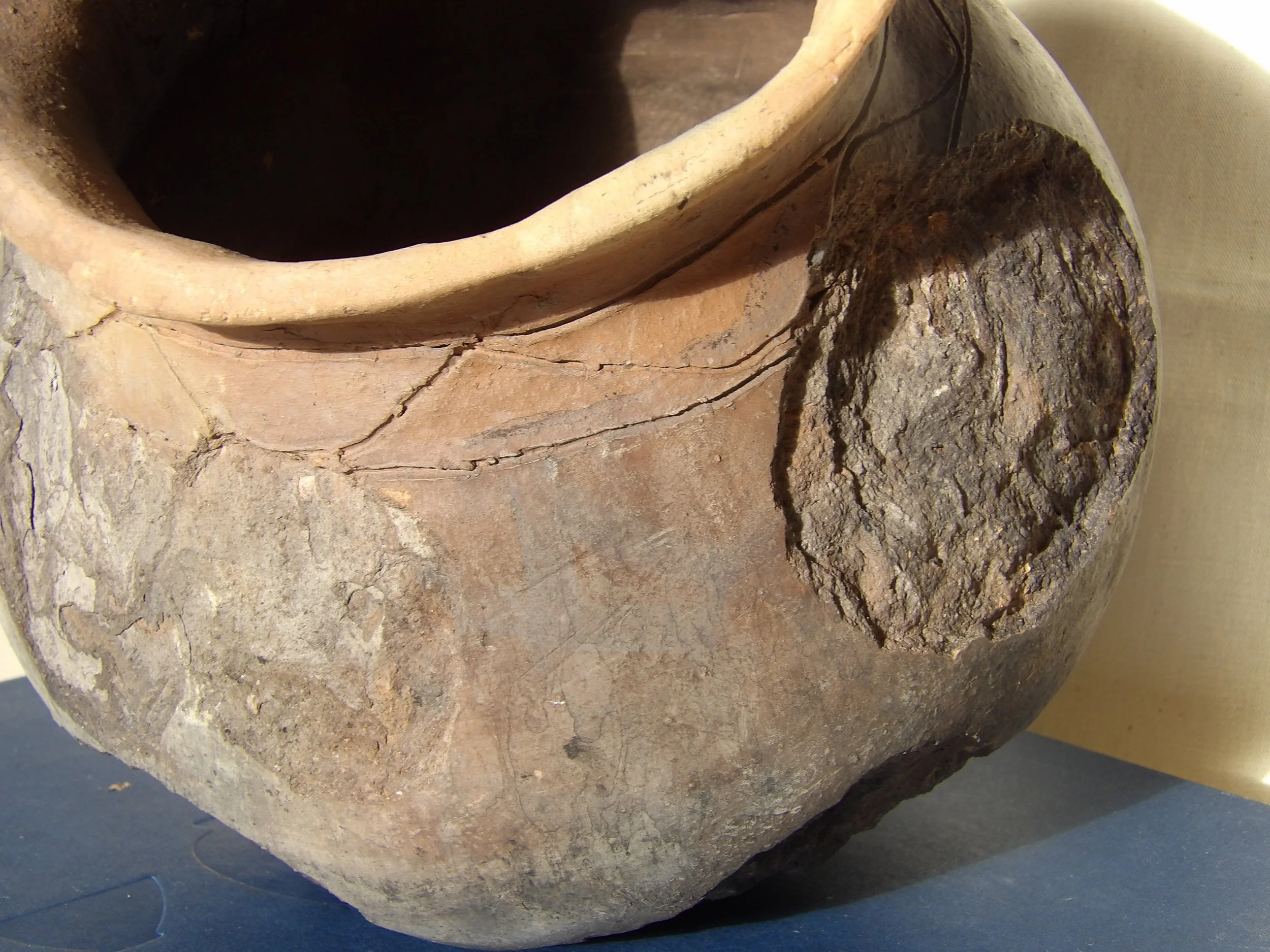
Hand-built earthenware vessel replicating an early Black Atlantic colonoware form. Made from wild clay and low-fired, the pot features a rounded body, restricted neck, and subtle surface variation resulting from coil construction and burnishing.
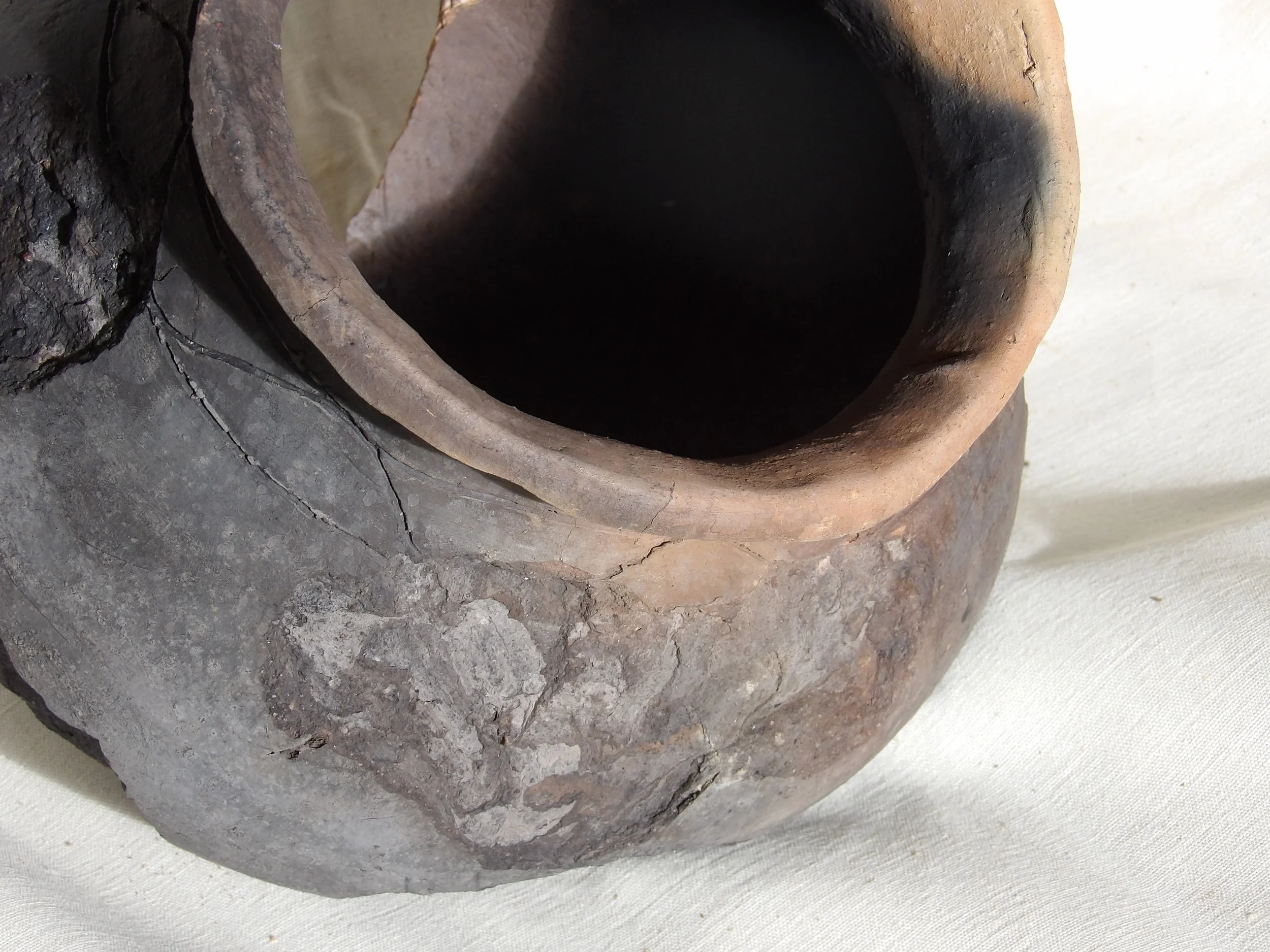
The surface bears traces of hand compression and burnishing, with uneven tonal shifts produced through open firing.
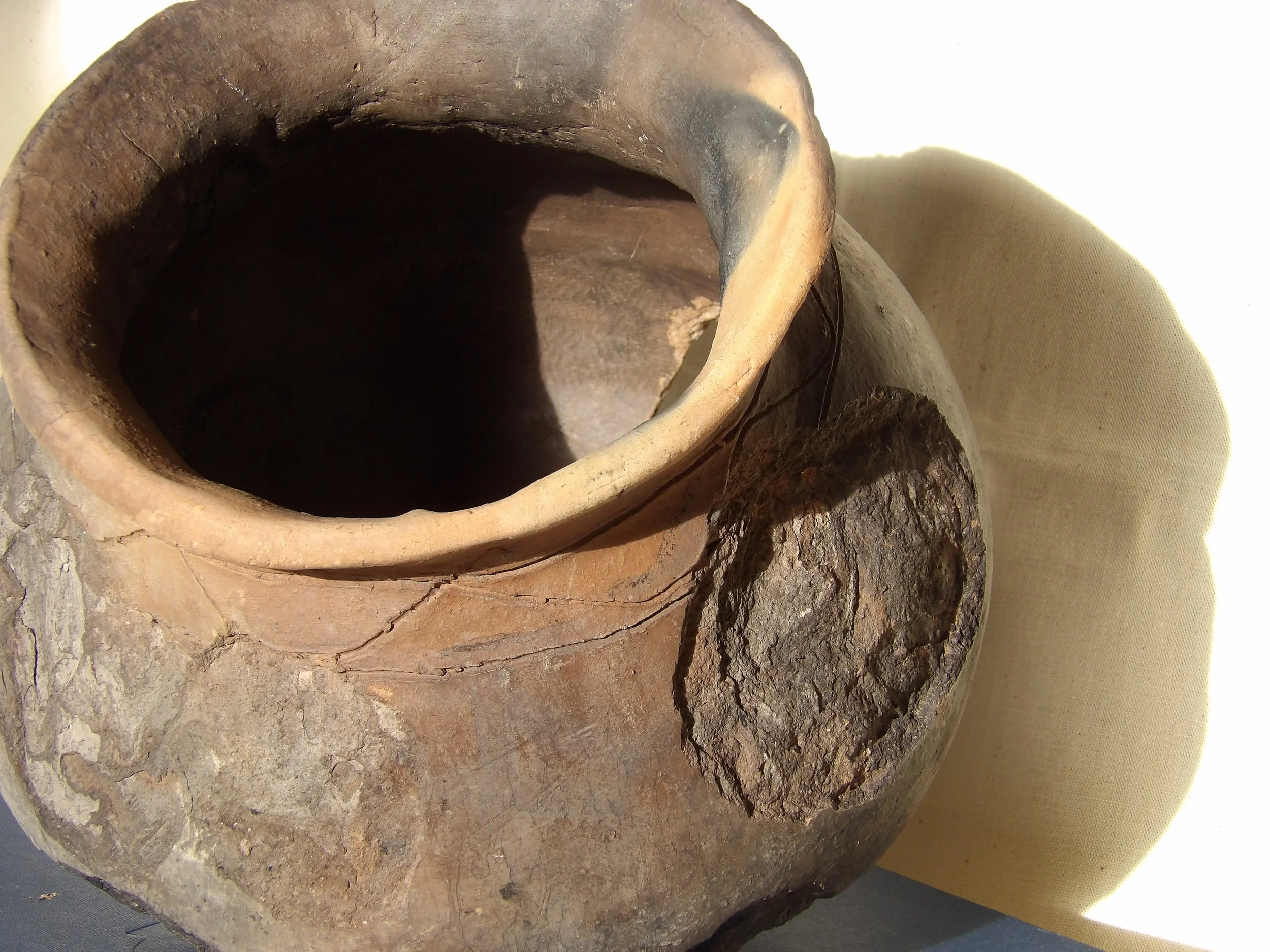
Constructed through hand-building and low-temperature firing, the pot reflects historical techniques associated with enslaved African and Indigenous ceramic practices.
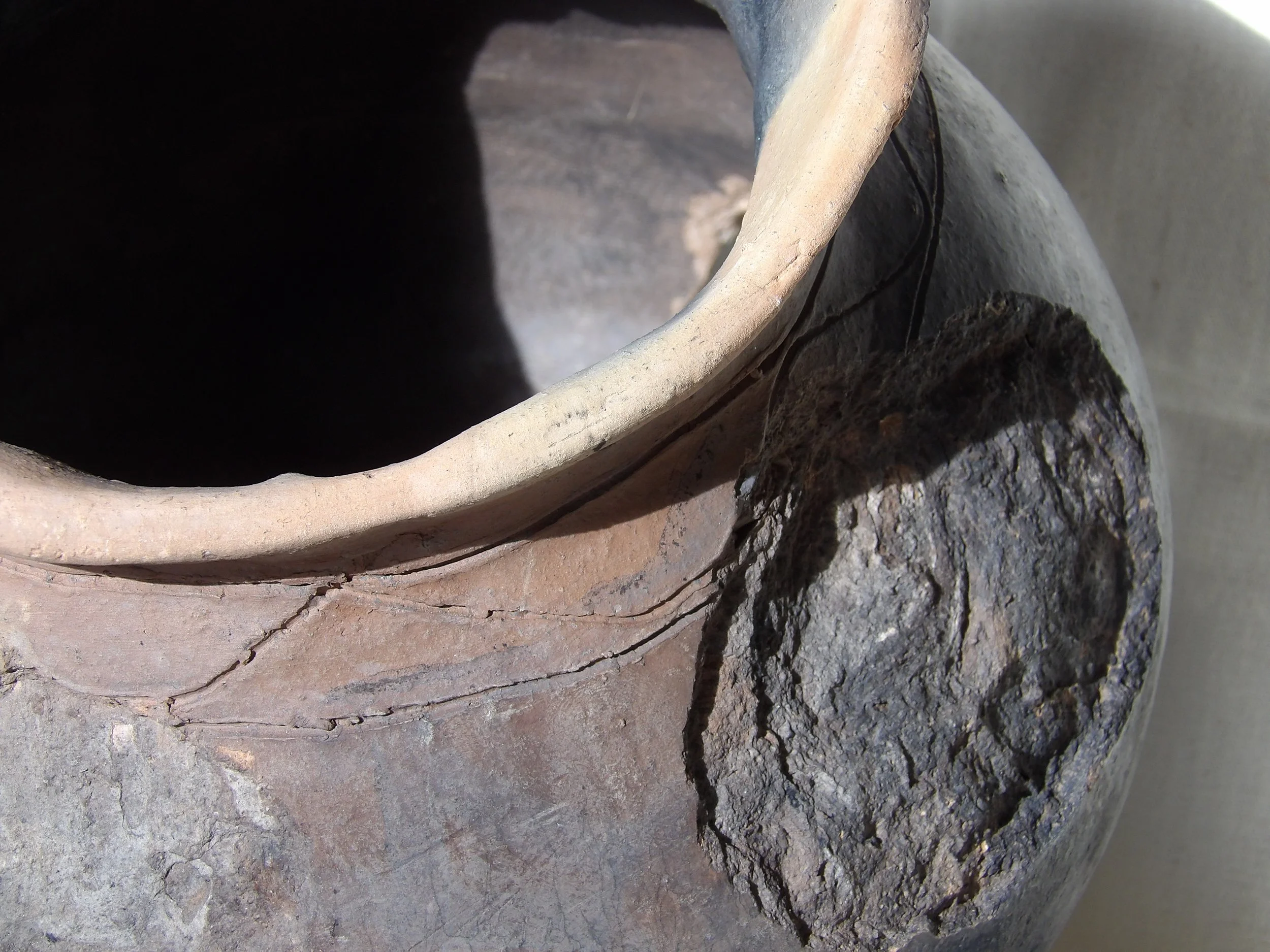
The form and firing process explore historical continuities in Black Atlantic ceramic production. This pot was constructed and fired in 2025 during a material research residency at Casa Julfa in Montmorillon, France.